Wednesday, August 7, 2019

M.I.T Tech* Escooters are NOT so climate-friendly

Electric Scooters NOT POLLUTION FREE M.I.T. exposes another private equity"False Green God"-
Considering the nuisance valuable-tough to calculate.

Sorry, scooters aren’t so climate-friendly after all

A look at the full lifetime emissions of the vehicles call into question the ecological assumptions around “micromobility.”

Aug 2, 2019
Bird boasts that its dockless electric scooters allow customers to “cruise past traffic and cut back on CO2 emissions—one ride at a time.”
Its rival Lime claims the vehicles “reduce dependence on personal automobiles for short distance transportation and leave future generations with a cleaner, healthier planet.”
But the mere fact that battery-powered scooters don’t belch pollution out of a tailpipe doesn’t mean they’re “emissions free,” or as “eco-friendly” as some have assumed. The actual climate impact of the vehicles depends heavily on how they’re made, what they’re replacing, and how long they last.
Researchers at North Carolina State University decided to conduct a “life-cycle assessment” that tallied up the emissions from making, shipping, charging, collecting, and disposing of scooters after one of them noticed that a Lime receipt stated, “Your ride was carbon free.”
The study concludes that dockless scooters generally produce more greenhouse-gas emissions per passenger mile than a standard diesel bus with high ridership, an electric moped, an electric bicycle, a bicycle—or, of course, a walk.
The paper found that scooters do produce about half the emissions of a standard automobile, at around 200 grams of carbon dioxide per mile compared with nearly 415. But, crucially, the researchers found in a survey of e-scooter riders in Raleigh, North Carolina, that only 34% would have otherwise used a personal car or ride-sharing service. Nearly half would have biked or walked, 11% would have taken the bus, and 7% would have simply skipped the trip.
The bottom line: roughly two-thirds of the time, scooter rides generate more greenhouse-gas emissions than the alternative. And those increased emissions were greater than the gains from the car rides not taken, says Jeremiah Johnson, an engineering professor and one of the authors of the paper.
The electricity used to charge the vehicles is one of the smallest contributors to the product’s emissions. Fully half come from the raw materials and manufacturing process, which the researchers estimated, in part, by disassembling a Chinese-made Xiaomi M365 scooter, a model that Lime and Bird are known to use.
The team weighed each part, including the aluminum frame, steel parts, lithium-ion battery, and electric motor. They then relied upon the findings of earlier peer-reviewed studies to assess the environmental impacts of extracting, producing, and delivering those raw materials.
But how much these emissions add up to on a per-mile basis depends heavily on how long scooters actually last. An increasingly evident problem is that the vehicles’ theoretical operating life of around two years scarcely resembles their “nasty, brutish and often short” existence in the real world.
Scooters are variously flung into water bodies, tossed from buildings, set on fire, run over, and used in stunts. Cleanup crews in Oakland, California, fished 60 scooters out of Lake Merritt in a single month last year, Slate reported.
An analysis of open data from Bird’s inaugural fleet in Louisville, Kentucky, conducted by Quartz last year, found that the average scooter lasted just 28.8 days. Likewise, Bird itself acknowledged in investor documents at an earlier point that its vehicles last only about a month or two, The Information reported.
The other major share of emissions, 43%, comes from the additional fleet of vehicles needed to navigate around a city like Raleigh each day, collecting scooters strewn across yards and sidewalks, taking them to a central charging location, and returning them to spots where riders can find to
Lime has made an effort to address some of the concerns raised about its environmental footprint. Late last year, the company announced it would offset all the emissions from charging its scooters and the vehicles used to pick them up by purchasing clean electricity, and investing in renewable energy and carbon offsets projects. 
"We welcome research into the environmental benefits of new mobility options, however this study is largely based on assumptions and incomplete data that produces high variability in the results," Lime said in a statement. "We believe micromobility will reduce pollution and mitigate climate change through clean and efficient modes of transportation and we’re making rapid advances in technology and operations that are helping us become a more sustainable company." 
The North Carolina findings are, however, consistent with some earlier efforts to evaluate life-cycle emissions or usage patterns.
The Portland Bureau of Transportation found that only 34% of the city’s riders took an e-scooter instead of driving their own car, or using a ride-sharing service or taxi. In fact, Lime itself found that about “1 out of every 3 trips” replaces a car ride, in surveys across 26 cities.
On the other hand, an unpublished analysis for clients by the Rhodium Group put the emissions figure far lower, at 28 grams per mile, the Financial Times reported. Hannah Pitt, an analyst with the research firm, said the new study’s methodology looked reasonable, but that there were some key differences in assumptions that added up to a wide gap in the end results.
Among them, Rhodium didn’t assume every scooter is picked up each night. Raleigh policy requires this, but that doesn’t mean it’s the common practice. The firm also assumed the vehicles last on the roads through their standard battery life, which Pitt says might have been too generous, given the level of vandalism and real-world wear and tear that’s since become clear.
Still, she says: “It would be shocking if a scooter’s per-mile emissions is half those of a passenger vehicle.”
The good news, according to the North Carolina study, is there are ways to reduce the emissions, including using electric or at least more fuel-efficient vehicles to collect the scooters, reducing the distance between pick-up and drop-off points, and only gathering vehicles with a low battery charge. Increasing the proportion of recycled materials, especially the aluminum, would also help.
The change that might matter most is extending the lives of scooters. If the vehicles lasted for two years instead of a few months, the study found, it would cut average emissions by about 30% per mile—and make scooters the cleaner option as much as 96% of the time.
But no surprise: walking is still going to be your greenest bet for getting around

The City*** Politicians resist obeying the "False Green God" of bike build out. 8/719

There is a most welcome element of balance and reason that is emerging from the polticians who
have largely been swayed by the lobbying, political contributions alleged vote constituentcy and the false God of Going Green perpetrated by Transportation Alternatives and their off shoots. It has been
a full scale assault. A full scale exercise in zealotry. The NRA according to presidential candidate
Mayor Pete has been promoting guns as a "false God". Indifferent to the number of people killed and injured. Ultimately its about $. PROFIT. But its couched behind 2nd Amendment, freedom, self defense and any kind of self righteous hokum they throw at the fan at any given time. However
the NRA is imploding/ The execs have been exposed as playing fast and loose with the proceeds of
the avaricious fundraising. The cumulative and increasing rate of massacre by assault rifle is giving
the lie to the hollow proclamations and offers of thoughts and prayers. Stuff. Without active sensible
gun policy reforms such is the stuff of  drooling fools.

Transportation Alternatives is merely a variation on that theme. Self styled "visionaries". Importing
bike programs from Europe. Different logistics. Street width. Vehicular and pedestrian density.
No effort to establish a responsible bike culture. When TA got the ear of Mayor Bloomberg they
prevailed on him to suppress enforcement to allegedly increase ridership. This constituted a reckless
indifference to human life. Excused by conflating the irresponsible bike culture with "Going Green"
The Emperor wears no clothes. Bikes like guns are TOOLS. Not something otherworldly and
beyond regulation. New York has been taken for a ride. Sold a bill of goods. Finally the reckless
riding-numerous injuries-untold number of close calls-has had its effect. That and the people rising against this narcissistic putsch. It's time that scofflaw riders were reined in Allow the NYPD to do its
job. Stop undermining the authority of the NYPD and defend the rights of people to lawfully enjoy the sidewalks and streets.


Some Local Pols Want City to Slow Down on New Bike Lane Push

A cyclist passes a "ghost bike" vigil on Clove Road on Aug. 5, as Staten Islanders mourned the death of Alex Cordero, a 17-year-old who was fatally struck by a vehicle in Westerleigh last month.
A cyclist passes a “ghost bike” vigil on Clove Road on Aug. 5, as Staten Islanders mourned the death of Alex Cordero, a 17-year-old who was fatally struck by a vehicle in Westerleigh last month. Photo: Clifford Michel /THE CITY
As the de Blasio administration ramps up plans to install more protected bike lanes, the city is already facing potential roadblocks from some City Council members and community boards.
Some Council members from southern Brooklyn and Staten Island voiced concern about new bike lanes in their districts —  saying they feared the city Department of Transportation’s “green wave” safety plan would roll over them.
“I don’t know what to anticipate from them, but if there’s no collaboration and no partnership, I’m going to voice my opposition to the implementation of anything in my district,” Councilmember Chaim Deutsch (D-Brooklyn) told THE CITY.
Mayor Bill de Blasio last month announced an ambitious effort to build 80 miles of protected bike lanes by 2021 in response to a dramatic uptick in cyclist deaths, which now sits at 18 this year. He sees the $58.4 million bike safety plan as in sync with his Vision Zero campaign to end traffic-related fatalities.
The DOT didn’t directly answer questions about how the agency would respond to opposition from elected officials in any given area. While a DOT spokesperson said local input would be taken into account, he emphasized that local speed bumps wouldn’t stop the plan.
“The city has moved ahead with street safety projects in the face of community board opposition before, because safety is our top priority,” the spokesperson, Brian Zumhagen, told THE CITY in a statement.

Some Local Opposition Looms

Deutsch told THE CITY that he’s concerned a protected bike lane proposed along Emmons Avenue in Sheepshead Bay would boost congestion and affect parents dropping off their kids at Bay Academy.
He and Theresa Scavo, chair of Community Board 15, said the DOT sent notices to local civic groups declaring the project will move forward this fall.
Deutsch said he hadn’t heard from the DOT since he brought up his initial concerns. But agency spokesperson Alana Morales said they’re still meeting with stakeholders and that no final decision has been made.
Meanwhile, two Council members from Staten Island said they were uncertain on where they stood on the protected bike lanes proposed in the borough, saying they needed more information.
“While I am generally supportive of bike lanes and most measures that save lives on our roads, many of the proposed protected bike lanes in the mayor’s Green Wave report appear to be rough ideas for the future,” Councilmember Debi Rose (D-North Shore) said in a statement.
A map of current and planned protected bike lanes on Staten Island.
A map of current and planned protected bike lanes on Staten Island. Photo: Clifford Michel/THE CITY
In the North Shore, the DOT has plotted out two bike lanes that would extend from around the Bayonne and Goethals Bridge, and converge near Willowbrook Park.
Councilmember Steven Matteo (R-Mid-Island) said that he also needed more details from DOT before taking a stand. The agency proposed a protected bike in his district that would cut through parkland and a golf course to connect Arden Heights to Richmond Town.
“While DOT had not briefed me on these plans, at first glance I have some real concerns about the appropriateness of bike lanes along some of these busy corridors,” Matteo said in a statement.
The DOT said that specific streets where bike lanes will run have yet to be determined.
“This plan is a vision and shows how a network will work together,” said Zumhagen. “We will be coming to [community boards] and other stakeholders with details as plans develop.”

Collaborative Effort Urged

Lawmakers in southern Brooklyn told THE CITY that the best path forward for creating bike lane networks is by teaming with the community.
Councilmember Justin Brannan (D-Bay Ridge) noted that DOT’s “visioning workshops” led Community Board 10 to support most bike lanes in a Bay Ridge and Dyker Heights network.
“It was a great cross-section of people from the neighborhood who came forward to talk to DOT and it was a very collaborative process,” Brannan told THE CITY. “Because sometimes what you see with DOT is they come, they make their presentations, and the next morning they start installing whatever they told you they were going to install. This was the opposite.”
Still, Community 10 ultimately opposed two bike lanes. Brannan and state Senator Andrew Gounardes (D-Bay Ridge), nonetheless, urged DOT to move forward.
Councilmember Mark Treyger (D-Coney Island) told THE CITY that he’s supportive of a protected bike lane on Shore Parkway in Brooklyn, and would buck the local community board, if there’s opposition. “You cannot drive your way out of congestion,” he said.
Meanwhile, it’s unclear what exactly the city considers “protected” bike lanes. As StreetsBlogNYC last year pointed out that the DOT has used the term to describe bike lanes where the barrier between cyclists and motorists is nothing more than paint on the ground.
Sign up for “THE CITY Scoop,” our daily newsletter where we send you stories like this first thing in the morning.
Want to republish this story? See our republication guidelines.


  1. bicycles

    Some Local Pols Want City to Slow Down on New Bike Lane Push


    Mayor de Blasio proposed an 80-mile “green wave” of protected bike

Tuesday, August 6, 2019

NYC DOT off hour delivery plan

The NYC DOT has a plan to increase "off hour deliveries". 370,000 residents added from 2010 to 2015. Over 500,000 jobs. Congestion increased to the point where a congestion tax was levied. 35 billion dollars lost to NYC business in 2107. It really will become the 24/7 city that never sleeps-and neither will we.
Off-Hour Deliveries

ABOUT OFF-HOUR DELIVERIES

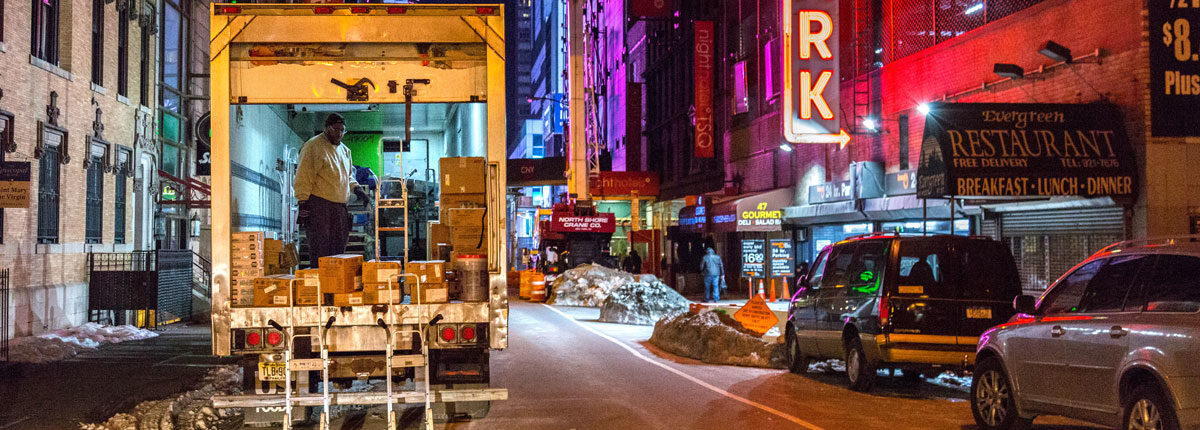
Delivery trucks and commercial vehicles are critical to the economic vitality of New York City (NYC), a population of 8.5 million. Without efficient freight transportation, retail stores would not have goods to sell, restaurants would have nothing to serve, offices would have no supplies, contractors would have difficulty building, and waste would remain on the sidewalk. Between 2010 and 2015, NYC added more than 370,000 residents and 520,000 jobs. As NYC’s population continues to grow, the demand for freight transportation will also increase, resulting in more trucks on the road.
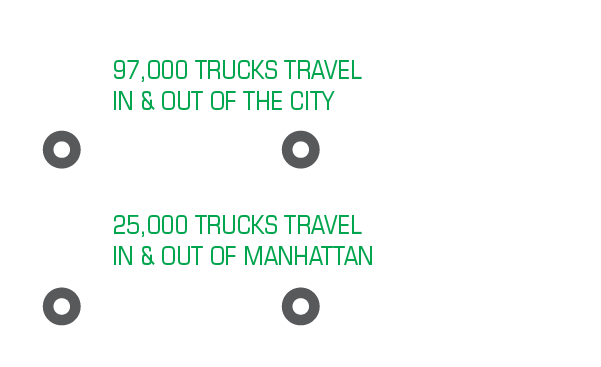
Daily freight trips between 2010 and 2013 increased by 5.7%. Approximately 97,000 trucks and commercial vehicles cross NYC boundaries each day, 25,000 moving to and from Manhattan. That’s a lot of traffic during the busiest parts of the day.
The continuous growth and demand on our transportation system have caused increased congestion, which reduces economic productivity and diminishes the quality of life. To address these issues, NYC’s Department of Transportation (DOT) in partnership with Rensselaer Polytechnic Institute (RPI), stakeholders and research partners implemented an Off-Hour Truck Delivery Pilot program from 2009 to 2010, funded by the United States (US) DOT.
View the Pilot Report

EXPANDING

Due to the success of the pilot program, NYCDOT is now seeking additional transporters and receivers to rethink their delivery schedule and shift to off-hour deliveries. The off-hour delivery program is intended to increase the number of deliveries between 7:00 p.m. and 6:00 a.m. within NYC, specifically Midtown and Lower Manhattan and the downtown areas of Brooklyn and Jamaica where there are high pedestrian volumes and limited curb space.
Strategic scheduling of deliveries will ultimately produce community, freight transporter, and goods receiver benefits – a win-win for all!

ECONOMIC BENEFITS

Off-hour Deliveries, attended or unattended where drivers can leave goods in a safe and secure location, will allow companies greater scheduling flexibility and store owners the ability to have products on shelves before opening. If every business in NYC got on board with the off-hour delivery program, local economic benefits could be upwards of $200 million per year!

NYC DOT’S ROLE

NYC DOT seeks collaboration with the freight, retail, and food sectors to educate industry businesses on the benefits of moving some deliveries to the off-hour period. DOT is exploring a number of incentives that will help companies investigate and ultimately move to off-hour deliveries. DOT and other City agencies are committed to protecting those who live, work, and visit the New York area from noise intrusion.

Wednesday, July 31, 2019

NY Post July 30,19 scofflaw E Bike Tour leader R Bernstein goes to court.

Brooklyn E bike tour leader runs red lights. Disparages use of helmets. Wait until one of his clients suffers traumatic head injury and sues him. Common sense will make a lot of cents at that point.
Public and personal safety wanted. If bike advocates spent as much time and effort upholding reasonable laws promoting public safety as they do bellyaching everyone would be better off.

Watch: Adult cyclist cited for riding without helmet — under law meant for kids

Two Brooklyn cops ticketed a 45-year-old cyclist for riding without a helmet — erroneously citing a law that actually only applies to pedal-pushers under 14, viral video shows.
“In New York City, you should not be riding without a helmet,” one of the officers insists in the clip, shot Saturday morning near the corner of Avenue L and Bedford Avenue in Midwood.
The hapless cyclist, Ricky Bernstein, told The Post that the encounter began when he, his wife, and two other riders were pulled over by cops from the 70th Precinct for blowing through a red light around 11:05 a.m.
“He was just trying to bust my chops for everything,” said Bernstein, who admitted that all four ran through the light.
He also unsuccessfully tried to sell the cops on the idea that because the city recently passed legislation allowing cyclists to ride through some red lights — set to go on the books in the fall — the move was virtually legal.
Bernstein lost that argument and he claims the officer kept him around for nearly another hour trying to find other infractions.
“The first thing the cop says to all of us is [show us your] license or you’re getting arrested,” said Bernstein. “The whole verbal exchange went 45 minutes. He was harassing me for not having reflectors, for the pedal-assisted bike I was on.”
Bernstein, who leads citywide e-bike tours for a living, countered each of the purported accusations the officers levied against him — but couldn’t shake the claim that he was supposed to be riding with a helmet.
“A helmet’s not a law either,” the clip shows Bernstein informing the lawman.
“It’s not? OK,” replies the cop with a skeptical tone, as his partner throws up his hands.
“No, it’s not. I’m 100 percent positive,” counters Bernstein, correctly — it is only legally required for cyclists younger than 14 to don helmets.
“Please. Write all your tickets,” said Bernstein in the clip. “I’m gonna fight all of them and win them.”
As it turns out, he won’t have to — the NYPD said in a statement Tuesday that the summons was scrapped.
“The summons issued to the male for not wearing a helmet was issued in error and has been voided,” said the NYPD.
That was good news for Bernstein on Tuesday night.
“I don’t think the punishment fit the crime,” said Bernstein. “It was completely ridiculous.”
Bernstein will still have to report to court to answer the ticket for running the red light.
Filed under


Ninth Street Bike Lanes in contention. Myra Manning Park Slope

Resident group wants bike lanes returned to near curb. Statistics thrown by mid street advocates.Stats should always be taken with a healthy grain of salt.

Bike Lane Has Made 9th Street 'Almost Lawless,' Residents Say

A group of residents started an advocacy group after they say the new 9th Street bike lane raised safety concerns, but not everyone agrees.


By Anna Quinn, Patch Staff
|

Bike Lane Has Made 9th Street 'Almost Lawless,' Residents Say
PARK SLOPE, BROOKLYN — A group of residents on 9th Street have started an advocacy group to solve what they say are a number of safety issues caused by a bike lane installed last year.
But if the first heated meeting about the concerns is any indication, not everyone agrees things should go back to the way they were. The bike lanes were part of a number of changes to the street following the death of two children in a car crash last year.
The meeting last Thursday, set up by Myra Manning, brought about 35 people and a representative from the borough president's office to All Saints Episcopal Church. It followed a petition Manning distributed after two of her elderly neighbors were almost hit by bicyclists speeding down the new lane, she said.
"Within one hour, I had 21 signatures," said Manning, who said the petition now has as many as 1,300 signatures. "I had thought I was alone, but then it just had a life of its own...Many people in neighborhood who I know personally have told me how unsafe they feel. It's almost lawless here."
The bike lane has made it so that delivery trucks or cars that are unloading need to do so unsafely in the middle of the road, which has become an issue for school buses, the supermarket and even a 9th Street funeral home who struggles to unload its caskets, Manning said.
Residents are also concerned about being hit by bicyclists, that their businesses are suffering because of a loss to parking and that 18-wheelers have taken to nearby one-way streets because they avoid the newly-narrow 9th Street. The group she co-founded, Citizens United For Safety, is seeking to hold meetings with more elected officials and obtain Department of Transportation documents to resolve the issues, Manning said.
Brooklyn Borough President Eric Adams, who had a representative of his office attend the meeting, wasn't immediately available for comment.
Manning contends that the street should be returned to its previous design, when the bike lane ran in between parking spaces and traffic instead of curbside.
But, it seems Manning and the new group will have an uphill battle. A few street-safety advocates who attended the meeting also say they will continue to make their voices heard in support of the bike lane, which they argue, along with other changes to street design, have decreased traffic deaths.
"All of the available evidence on protected bike lanes in New York City shows that they have made safer any street on which they have been installed," said Brian Howald, a Brooklyn Heights resident who attended the meeting. "Even though it feels odd to have bike lanes up against the curb, and even if it feels less safe, all the evidence suggests that it is indeed safer."
Howald said it is too early to analyze the 9th Street lane's impact on safety, but pointed to DOT statistics from 2014 about six bike lane projects in Manhattan. Injury crashes were reduced 17 percent, cyclist injuries were reduced 2 percent, pedestrian injuries were reduced 22 percent and injuries to car occupants were reduced 25 percent within three years, according to the report.
The new bike lanes can therefore improve safety for 9th Street as well, Howald contended.
Manning said that she and those who live on 9th Street do not feel that safety was an issue before the bike lanes were added.
But, Howald pointed out that Crashmapper shows that there were 118 total crashes, 158 injuries and three fatalities on a stretch of 9th Street since 2011.
Another street-safety advocate Peter Kaufman, who admits he got into a heated squabble with some of the meeting attendees, said the new group's arguments are similar to other times communities have fought against adding bike lanes.
"It's like bike-lash bingo," he said.
Manning maintained that the group is not meant to be anti-bike lane.
"We are not advocating that there should be no bike lanes, we're simply concerned about the bike lane being next to the curb," she said. "We're concerned citizens working for the safety of all."
Photo by Nick Rizzi/Patch


Tuesday, July 30, 2019

NY Post** Corey Johnson Cars Shouldn't Be King of the Road.July 30-19

OK Spkr Johnson tell us how you really feel. And by the way would it be fair and balanced to
say how you propose to deal with the epidemic of rogue bike riding that is integral to many of the cycling deaths and a major disruption to public safety? Somehow that side of the discussion is given
short shrift.

Corey Johnson: Cars shouldn’t be the ‘king of the road’ in NYC

City Council Speaker Corey Johnson continued to wage his war against motorists Tuesday — declaring that cars should no longer be “king of the road.”
Responding to the death of a 30-year-old Brooklyn cyclist a day earlier — the 18th bike rider killed in the city this year — Johnson told NY1 “it’s time to reclaim our streets for pedestrians and bicyclists.”
“Enough of putting cars Number 1, and making cars the king of the road,” he added. “You’re literally taking your life in your hands if you’re not biking in a protected bike lane.”
The comments come two weeks after Johnson, an early front-runner in the 2021 mayoral race, bluntly said he believes there’s too much public space dedicated to on-street car parking and that he plans to use his clout to replace some of the spaces with protected bike lanes.
When asked if such a move would alienate car-driving voters, Johnson said it “might, but it’s a matter of life and death.”
Johnson earlier this year proposed a five-year plan aimed at getting people out of their cars — including legislation that would require the city to build 150 miles of dedicated bus lanes and 250 miles of protected bike lanes.
Johnson later told The Post he is not a frequent cyclist himself and typically takes the subway to work — although he has an NYPD detail and is “driven around sometimes.”
“Frankly, I couldn’t do my job as speaker if I relied solely on mass transit,” he said.
“So many areas in this city don’t have subways or good bus service and that’s what I want to change. I understand that people right now need cars to get around.”
If elected mayor, he claimed he would still take the subway.
The speaker also told NY1 he’s very concerned about a Metropolitan Transportation Authority reorganization plan approved by the cash-strapped agency’s board last week — as it could strip power from popular subways boss Andy Byford.
Johnson said the council plans to hold hearings on the plan to get answers.
Filed under

CPW condo owners sue to "disrupt" CPW bike lane July 30,2019

From Streets Blog-Parroting the Trans Alt line. Condo owners have taken the lawsuit route
to counteract the high handed methods of City and DOT. This is a familiar tune. The proposed Chinatown jail has elicited a legal response from the community. Clearly this is one way the people
have to defend their rights against the e commerce disruptors. Of which we can count Trans Alt
as one. Further it needs to be noted that far from being a humble means of transportation and environmentally friendly The Related Companies Real Estate Developers-the Equinox and Blink
health club franchises and friends of Michael R Bloomberg(enterprises) control the C bike hustle.
Mark Gorton-head of Tower Financial-a hi frequency trading hedge fund and loser as the developer of lime wire software to the Recording Industry of America to the tune of 105 million dollars
is the primary financial backer of Trans Alt. Folks this is another elitist scheme under the guise
of going green. All that's green isn't as it seems.

BREAKING: Upper West Side NIMBYs Sue City Over Central Park West Bike Lane

The city is being sued to block a protected bike lane on Central Park West — where Madison Lyden was killed last year. Photo: David Meyer
A group of Upper West Siders has started legal proceedings against the city for its plans to build a protected bike lane on Central Park West.
The suit, filed late on Tuesday by owners at the Century Condominum, argues that the plan constitutes “a wide-spread and comprehensive change to the traffic patterns on Central Park West” that is illegal because the city did not perform a sufficient environmental review.
Read the entire filing below.
City lawyers will race to 60 Centre Street on Wednesday in hopes of preventing a judge from issuing a temporary restraining order against the life-saving bike path, which was expected to be begun this year — little over a year after cyclist Madison Lyden was killed on the roadway when she was forced out of an unsafe painted bike lane and into traffic.
The case is just the latest in the last few months featuring a small group of residents challenging a fairly routine — and generally widely accepted as legitimate — use of government power. In the Bronx, some business owners on Morris Park Avenue sued the city to block its plans for a “road diet” that would reduce the roadway from four speedway-like lanes to two, with a center turning bay — a design that has been used repeatedly all over the city.
And on 14th Street, wealthy West Village and Chelsea landowners sued to stop the city’s plans for a bus-only roadway, claiming it would send cars to their quiet residential streets.
Both matters are pending in various courts.